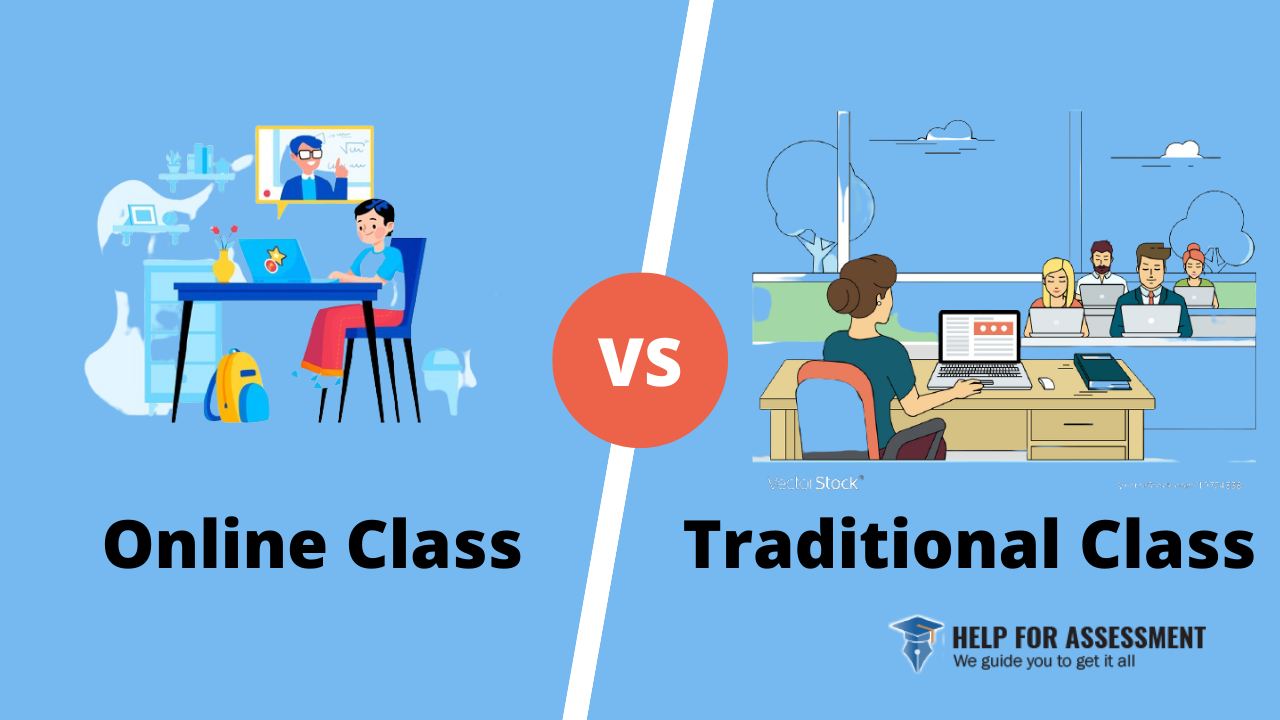
Education has changed significantly over the past few years. Students no longer have to be physically present in a classroom every day to learn something new. With an internet connection and a suitable device, it is possible to take a course from almost anywhere.
At the same time, traditional classroom education remains an important part of learning. Sitting with a teacher and other students provides a structure and personal interaction that online courses sometimes struggle to reproduce.
This raises an interesting question: Which is better, online courses or traditional classes?
The answer depends on the student, the subject, the learning environment, and what the student hopes to achieve. Both approaches have advantages and disadvantages.
What Are Online Courses?
Online courses are educational programs delivered through the internet. Students may watch recorded lessons, attend live virtual classes, complete assignments, participate in discussions, and take online tests.
Some courses are completely self-paced, meaning students can study whenever they have time. Others follow a fixed schedule with live instructors and deadlines.
Online learning has become popular because of its flexibility. A student does not necessarily have to travel to a school or training center to participate.
For people with busy schedules, this can make education much easier to fit into everyday life.
The Benefits of Traditional Classes
Traditional classrooms offer something that technology cannot always replace: direct human interaction.
Students can ask questions and receive immediate responses from a teacher. They can participate in discussions, work with classmates, and receive guidance when they are struggling.
The classroom environment can also provide structure.
For some students, having a fixed timetable makes it easier to stay focused. Knowing that they have to attend class at a particular time can create a routine that encourages consistency.
Traditional classes can also be especially valuable for subjects that require hands-on practice. Science experiments, laboratory work, technical training, sports, and certain professional skills may benefit greatly from physical instruction.
The Flexibility of Online Learning
One of the strongest advantages of online courses is flexibility.
Imagine a student who works during the day and wants to learn a new skill in the evening. Attending a traditional class might be difficult, especially if the school is far away.
An online course could allow that student to study after work.
The same applies to parents, professionals, travelers, and people who live far from educational institutions.
Students can often choose when and where they study. That freedom can make education available to people who might otherwise have difficulty accessing it.
Online Courses Can Be More Convenient
Transportation is another factor.
Traditional education may require students to spend time traveling to and from school. Online learning eliminates much of that journey.
A student can potentially wake up, open a laptop or smartphone, and begin a lesson without leaving home.
This convenience can save time and energy.
However, convenience does not automatically mean better learning. Students still need discipline. Having a course available at any time does not help if the student continually postpones studying.
The Challenge of Staying Motivated
Self-discipline is one of the biggest challenges of online learning.
In a physical classroom, the teacher and other students create an environment where learning is expected. At home, there may be many competing distractions.
A student might intend to study for an hour but end up checking social media, watching entertainment videos, or doing something completely unrelated.
Online learners therefore need to develop good time-management habits.
Creating a study schedule, setting specific goals, and studying in a quiet environment can make online learning much more effective.
Traditional Classes Provide Social Interaction
Education is not only about absorbing information.
Students also learn by communicating, asking questions, explaining ideas, and working with other people.
Traditional classrooms naturally provide these opportunities.
Students can form friendships, participate in group activities, and learn how to cooperate with people who have different personalities and perspectives.
Online courses can provide interaction through discussion boards, video meetings, group chats, and virtual projects, but the experience can be different from being physically present with classmates.
Online Learning Offers Access to More Courses
Another major advantage of online education is the variety of courses available.
A student may be interested in a very specific subject that is not taught at a nearby school. Online learning can remove that geographical limitation.
Someone interested in programming, digital marketing, graphic design, photography, business, languages, data analysis, or another specialized field can often find an online course created specifically for that topic.
This gives learners the opportunity to explore subjects beyond what their local institutions offer.
Cost Can Be an Important Factor
The cost of education varies greatly depending on the institution and course.
Some online courses are inexpensive or even free, while others from universities and professional institutions can be quite expensive.
Traditional education can involve tuition fees as well as transportation, accommodation, books, uniforms, and other expenses.
However, students should not choose a learning method based only on price.
A cheap course that does not teach useful skills may provide less value than a more expensive program with excellent instruction and recognized qualifications.
The quality of the education should always be considered alongside the cost.
Which Method Is Better for Different Students?
There is no universal answer.
Students who are highly independent and comfortable managing their own schedules may enjoy online courses.
Someone who prefers direct explanations, regular supervision, and classroom interaction may perform better in a traditional environment.
Learning style also matters.
Some people learn best by watching videos and practicing independently. Others understand concepts more easily when a teacher explains them face-to-face.
Age and experience can matter as well. Younger students may benefit from the structure of traditional education, while adults with busy schedules may appreciate the flexibility of online learning.
A Combination May Be the Best Option
The choice does not always have to be online versus traditional.
Many educational institutions now use a blended approach that combines both.
Students might attend physical classes while using online platforms for homework, additional lessons, quizzes, research, and revision.
This approach can provide the structure of traditional education while taking advantage of digital technology.
For example, a teacher can introduce a topic in class, then give students an online video and interactive exercise to complete afterward.
The combination can make learning more flexible without removing the benefits of face-to-face teaching.
Technology Is Changing Education, Not Replacing Teachers
There is sometimes a fear that online education and artificial intelligence will eventually replace traditional teachers.
Technology can certainly automate some educational tasks, but teachers provide much more than information.
Good teachers understand their students, recognize when someone is struggling, encourage participation, provide feedback, and help students develop confidence.
Technology is most useful when it supports teachers rather than simply attempting to replace them.
Making the Right Choice
Before choosing between an online course and a traditional class, students should consider several questions.
How much flexibility do I need? Do I learn well independently? Do I need regular interaction with a teacher? Is the subject practical or theoretical? What is my budget? How much time can I dedicate to studying?
Answering these questions can make the decision much easier.
The best learning environment is the one that fits the student’s circumstances and helps them consistently make progress.
Final Thoughts
Online courses and traditional classes both have an important place in modern education.
Online learning offers flexibility, convenience, variety, and access to education from almost anywhere. Traditional classrooms offer structure, personal interaction, immediate support, and valuable social experiences.
Neither method is automatically better for everyone.
Instead of asking which one is universally superior, it may be more useful to ask which one works best for a particular student and a particular subject.
As technology continues to develop, the distinction between online and traditional education may become less important. Schools and online platforms will increasingly combine their strengths, giving students more choices in how they learn.
Ultimately, successful education is not simply about where a lesson takes place. It is about whether students are engaged, supported, motivated, and given the tools they need to understand and apply what they learn.
