Introduction
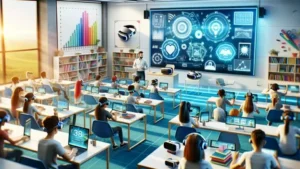
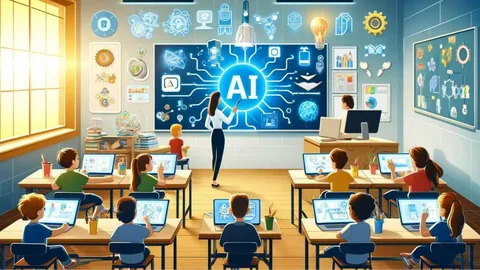
Artificial intelligence, commonly known as AI, is becoming one of the most important technologies in the modern world. It is already being used in many areas, including business, healthcare, communication, transportation, and education. In schools, artificial intelligence is beginning to change how students learn, how teachers work, and how educational institutions manage information.
Although AI is still developing, its future in education looks promising. In the coming years, schools may use AI to provide personalized learning, assist teachers, improve communication, identify students who need help, and make education more accessible. However, schools will also need to deal with challenges such as privacy, academic dishonesty, unequal access, and overdependence on technology.
Personalized Learning
One of the most promising uses of AI in schools is personalized learning. Students do not all learn in the same way or at the same speed. Some students may understand a lesson quickly, while others need additional explanations and practice.
AI systems can analyze a student’s performance and identify areas where the student is struggling. The system can then recommend activities or learning materials that match the student’s needs.
For example, if a student has difficulty with fractions in mathematics, an AI learning system could provide additional exercises and explanations about fractions. Once the student improves, the system could introduce more advanced problems.
This could make education more responsive to individual students.
AI Assistants for Students
In the future, students may have access to AI-powered learning assistants. These systems could answer questions, explain difficult topics, provide examples, and help students revise lessons.
A student studying at home could ask an AI assistant to explain a difficult scientific concept in simpler language. The student could then ask follow-up questions until the concept becomes clear.
However, students must be encouraged to think for themselves. AI should help students understand a subject rather than simply provide answers that they copy without learning.
Supporting Teachers
AI could also make teachers’ work easier. Teachers spend a lot of time preparing lessons, creating exercises, marking certain assignments, recording grades, and organizing information.
AI tools may assist with some of these repetitive tasks. For example, an AI system could help generate practice questions based on a particular topic or organize student performance data.
This could give teachers more time to focus on activities that require human interaction, such as explaining ideas, motivating students, providing emotional support, and managing classroom discussions.
AI is therefore more likely to change the role of teachers than completely eliminate the need for them.
Early Identification of Students’ Difficulties
Another possible future use of AI is identifying students who are struggling before their problems become serious.
An AI system could analyze patterns in attendance, assignments, quiz results, and other academic information. If a student repeatedly performs poorly in a particular subject, the system could alert the teacher.
The teacher could then investigate the problem and provide additional support.
Early intervention can be important because students who fall behind for a long time may lose confidence and become less interested in school.
Improved Accessibility
Artificial intelligence may also make education more accessible to students with different needs.
Speech-to-text technology can help students who have difficulty writing. Text-to-speech systems can help students who have difficulty reading. AI-powered translation tools can also help students understand educational content in different languages.
These technologies can help create a more inclusive learning environment where more students can participate effectively.
AI and Examination Systems
AI may also influence examinations in the future. Schools could use intelligent systems to create questions that match different levels of difficulty.
AI may also assist with marking certain types of assessments. For example, objective questions can be marked automatically, saving teachers time.
However, human teachers may still be needed to assess creative writing, complex reasoning, projects, and other forms of work where human judgment is important.
Schools will also need strong systems to prevent students from using AI to cheat during examinations.
Academic Honesty
One of the biggest challenges of AI in education is academic dishonesty. Students can use AI tools to generate essays, answer questions, or complete assignments.
If students simply submit AI-generated work without understanding it, they may receive good grades without developing the skills they are supposed to learn.
Schools will therefore need clear policies about acceptable AI use. Students should be taught that using AI for brainstorming, explanations, or revision can be helpful, but submitting work created entirely by AI as their own may be dishonest.
Teachers may also need to design assignments that encourage personal reflection, discussion, practical work, and original thinking.
Privacy and Data Protection
AI systems often require large amounts of information to work effectively. In schools, this could include students’ grades, learning activities, attendance, and other personal information.
Protecting this information will be extremely important. Schools must ensure that student data is stored securely and used responsibly.
Students and parents should also understand what information is being collected and why.
The Digital Divide
Another challenge is unequal access to AI technology. Some schools may have modern computers, fast internet, and advanced AI tools, while others may struggle to provide basic technological equipment.
If access is unequal, AI could increase the gap between students from different backgrounds.
Governments, schools, and technology providers should therefore work toward making educational technology affordable and accessible to as many students as possible.
The Changing Role of Teachers
As AI becomes more common, the role of teachers may change. Teachers may spend less time on repetitive administrative tasks and more time acting as mentors, guides, and learning facilitators.
Human qualities will remain extremely important. A teacher can understand a student’s emotions, encourage someone who has lost confidence, settle disagreements, and inspire students in ways that technology cannot fully reproduce.
The future of education should therefore combine the strengths of AI with the strengths of human teachers.
Preparing Students for an AI-Powered World
Schools also have a responsibility to prepare students for a future in which AI is likely to be common in many workplaces.
Students should learn not only how to use AI tools but also how to question their results, recognize mistakes, protect personal information, and use technology ethically.
Critical thinking will become especially important. Students need to know that technology can provide information without necessarily providing the correct answer.
Conclusion
The future of artificial intelligence in schools is likely to bring significant changes to education. AI can provide personalized learning, assist teachers, improve accessibility, identify students who need support, and make some educational tasks more efficient.
At the same time, schools must address important challenges such as academic dishonesty, privacy, unequal access, inaccurate information, and overdependence on technology.
AI should not be seen as a replacement for teachers. Instead, it should be used as a tool that helps teachers and students achieve better educational results. The most successful schools of the future will likely be those that combine advanced technology with strong teaching, human relationships, critical thinking, and responsible use of information.
If introduced carefully and fairly, artificial intelligence could become one of the most useful educational technologies of the future.