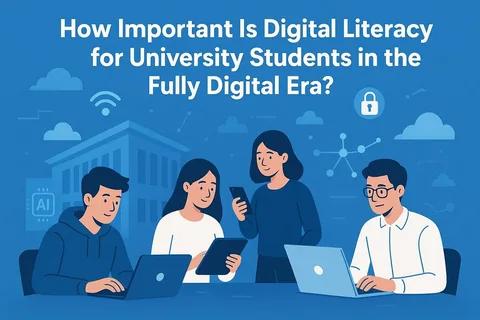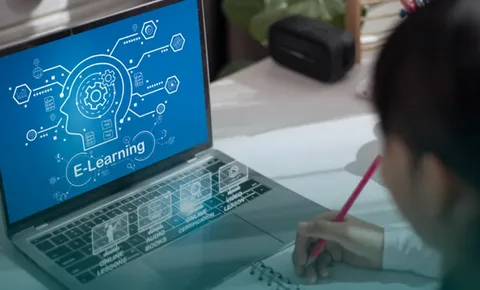
Think about how students studied 20 or 30 years ago. If they wanted to learn about a subject, they probably went to a library, searched through textbooks, took notes by hand, and waited until the next lesson to ask their teacher questions. Today, learning can happen almost anywhere. A student can watch a lesson on a smartphone, search for an explanation online, practice with an educational app, or use artificial intelligence to understand a difficult topic.
Technology has changed education in ways that would have been difficult to imagine in the past. It has not replaced teachers or traditional classrooms, but it has given students and educators new ways to communicate, discover information, practice skills, and solve problems.
Learning Is No Longer Limited to the Classroom
One of the biggest changes technology has brought to education is flexibility. Students no longer have to depend entirely on what happens during school hours. With an internet connection and a suitable device, learning materials can be available at almost any time.
For example, a student who does not understand a mathematics lesson can find another explanation online. They can watch a video, read a simple guide, complete practice questions, and return to the lesson until the idea finally makes sense.
This flexibility can be especially useful for students who learn at different speeds. Some students understand a concept immediately, while others need more time and repetition. Digital resources make it easier for learners to review information without feeling pressured to keep up with everyone else.
Educational Apps Make Practice More Interactive
Another important development is the growth of educational apps. Instead of simply reading information from a textbook, students can interact with lessons through quizzes, games, simulations, flashcards, and other activities.
For younger learners, this can make education feel less intimidating. A child who finds traditional spelling exercises boring may become more interested when the same activity is presented as a simple game.
Older students can also benefit. Language-learning apps, coding platforms, mathematics tools, and online study systems allow students to practice specific skills repeatedly and receive immediate feedback.
The real advantage is not simply that these tools look modern. Their value comes from giving students opportunities to practice and learn from their mistakes.
Teachers Have More Tools at Their Fingertips
Technology has also changed the role of teachers. A teacher is no longer limited to a chalkboard, printed textbook, and handwritten assignments.
Teachers can use presentations, videos, interactive displays, online quizzes, digital worksheets, and educational platforms to explain difficult ideas in different ways. If one method does not work for a particular group of students, another approach can be introduced.
Technology can also reduce some administrative work. Digital tools can help teachers organize assignments, communicate with students, provide feedback, and track academic progress. This can give educators more time to focus on the part of teaching that matters most: helping students understand and grow.
Artificial Intelligence Is Creating New Learning Opportunities
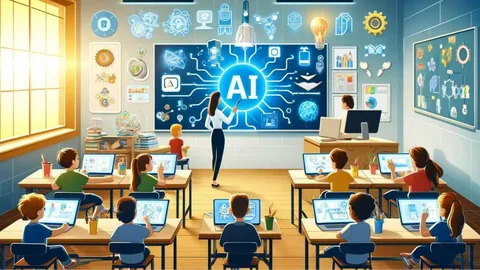
Artificial intelligence is one of the newest technologies influencing education. AI tools can help students brainstorm ideas, explain complicated subjects, create practice questions, and receive personalized assistance.
Imagine a student studying a difficult science topic late in the evening. Instead of waiting until the next school day to ask a question, they may be able to use an AI-powered learning tool to receive a simple explanation and examples.
However, there is an important difference between using AI as a learning assistant and using it to avoid learning. Students still need to think critically, check information, develop their own ideas, and complete their work honestly.
When used responsibly, AI can support learning rather than replace the effort required to learn.
Online Learning Has Opened More Doors
Online education has made it possible for people to learn from institutions, teachers, and experts they might never have had access to otherwise.
A student can take an online course from another country, learn a new programming language, study business skills, or develop a creative hobby without physically attending a traditional classroom.
This is particularly valuable for people who have limited access to educational institutions. Someone living far from a major city may still be able to access useful learning materials online.
Of course, online learning also requires discipline. Without a teacher physically present, students need to manage their time, stay motivated, and avoid distractions. Having access to information is helpful, but students still need the determination to use it.
Technology Makes Collaboration Easier
Learning is not always an individual activity. Students often need to work together on projects, presentations, research, and assignments. Technology has made collaboration much easier.
Students can work on shared documents, communicate through educational platforms, participate in video meetings, and exchange ideas without being in the same physical location.
This can also prepare students for the modern workplace. Many professionals already collaborate with colleagues who live in different cities or countries. Learning how to communicate and work digitally can therefore become a useful skill beyond school.
There Are Still Challenges
Despite its benefits, technology is not a perfect solution to every educational problem.
Not every student has reliable internet access, a personal computer, or a modern smartphone. This digital divide can create differences between students who have easy access to technology and those who do not.
There are also distractions. A device that provides access to an educational video can also provide access to social media, games, entertainment, and countless other distractions.
Privacy and online safety are additional concerns. Students need to understand how to protect personal information, recognize unreliable sources, and behave responsibly online.
For these reasons, technology should be introduced thoughtfully. Simply putting computers or tablets in a classroom does not automatically create better education.
The Teacher Still Matters
With all the attention surrounding artificial intelligence and digital learning, it can be easy to assume that technology will eventually replace teachers. In reality, teachers continue to play an important role.
A good teacher does more than provide information. Teachers encourage students, recognize when someone is struggling, answer questions, provide support, create meaningful discussions, and help students develop confidence.
Technology can provide information quickly, but human guidance remains extremely valuable. The strongest approach is often a combination of both: technology providing useful resources while teachers provide direction and personal support.
What Does the Future of Learning Look Like?
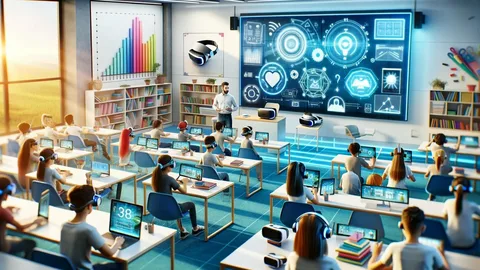
Education will probably continue becoming more digital. Artificial intelligence, virtual reality, interactive learning platforms, and other emerging technologies may create experiences that are even more personalized and engaging.
Students may increasingly have learning systems that adapt to their strengths and weaknesses. Teachers may use technology to identify areas where students need additional support. Classrooms may also become more connected to learning experiences outside school.
But the basic purpose of education will remain the same. Students still need to develop knowledge, curiosity, creativity, communication skills, problem-solving abilities, and good judgment.
Final Thoughts
Technology is changing the way students learn by making education more flexible, interactive, accessible, and personalized. From educational apps and online courses to artificial intelligence and digital classrooms, students now have more learning resources than ever before.
At the same time, technology should be treated as a tool rather than a replacement for teachers, hard work, or critical thinking. The best results happen when students know how to use technology responsibly and educators know how to use it effectively.
The future of education is unlikely to be about choosing between technology and traditional teaching. Instead, it will be about finding the right balance between them. When technology and good teaching work together, learning can become more engaging, flexible, and meaningful for students.