Introduction
Education has changed significantly because of the development of technology. In the past, most students had to attend physical classrooms to receive lessons from their teachers. Today, students can learn through the internet without necessarily being in the same location as their teachers. This method is known as online learning.
Traditional classroom learning and online learning both have important advantages and disadvantages. While traditional classrooms provide face-to-face interaction and a structured learning environment, online learning offers flexibility and access to educational resources from almost anywhere. Understanding the differences between these two methods can help students, teachers, and educational institutions decide how technology should be used in education.
What Is Traditional Classroom Learning?
Traditional classroom learning is the conventional method of education in which teachers and students meet physically at a school or other educational institution. The teacher explains lessons, students listen and participate, and activities such as tests, discussions, and practical exercises are carried out in person.
This method has existed for many years and remains the main form of education in many schools. It provides students with a regular timetable and a specific place where learning takes place.
One major advantage of traditional classroom learning is direct interaction. Students can ask questions and receive explanations immediately. Teachers can also observe students’ reactions and notice when someone is confused or needs additional assistance.
What Is Online Learning?
Online learning involves using the internet and digital devices to access educational lessons and materials. Students may attend live virtual classes, watch recorded lectures, complete online assignments, participate in discussions, and take digital tests.
Online learning can take place through computers, tablets, or smartphones. Students may study from home, a library, or another location with internet access.
One of its biggest advantages is flexibility. Students do not always have to travel to school to attend lessons. They may also be able to watch recorded lessons at a convenient time.
Flexibility and Convenience
Online learning is generally more flexible than traditional classroom learning. A student who has other responsibilities may be able to organize study time around those responsibilities.
For example, someone taking an online course may study early in the morning or later in the evening. Recorded lessons can also be watched more than once, allowing students to review difficult sections.
Traditional classroom learning is usually less flexible because students are expected to attend lessons at specific times. However, this fixed schedule can actually be helpful for students who need structure and regular supervision.
Interaction and Social Development
Traditional classrooms have a strong advantage when it comes to face-to-face interaction. Students can talk directly with their teachers and classmates. They can participate in group discussions, practical activities, presentations, and other social experiences.
These interactions help students develop communication, teamwork, leadership, and interpersonal skills.
Online learning can also provide opportunities for interaction through video meetings, discussion forums, messaging platforms, and group projects. However, online communication may not provide the same experience as being physically present with other people.
For younger students especially, social interaction can be an important part of their overall development.
Access to Learning Materials
Online learning provides students with access to a wide variety of digital resources. Students can use electronic books, videos, online libraries, educational websites, simulations, and other materials.
This can be especially useful when physical textbooks are expensive or difficult to obtain.
Traditional classrooms also provide learning materials, but students may depend more heavily on the resources available at their school. However, physical books and classroom resources remain valuable because they do not always require internet access or electricity.
Cost of Education
Online learning can sometimes be less expensive because students do not have to spend money travelling to school every day. Digital resources may also reduce the need for printed materials.
However, online learning still requires devices, electricity, and internet access. In areas where internet services are expensive or unreliable, these costs can become significant.
Traditional classroom learning also involves transportation, uniforms, textbooks, school facilities, and other expenses. The total cost depends greatly on the institution and location.
Challenges of Online Learning
One of the main challenges of online learning is the need for self-discipline. Without a teacher physically present, some students may find it difficult to remain focused and complete their work on time.
Technical problems can also interrupt lessons. Poor internet connections, power outages, broken devices, or limited access to data can make online learning difficult.
Another problem is that not every student has equal access to technology. Students from families with limited financial resources may struggle to obtain reliable devices and internet services.
Challenges of Traditional Learning
Traditional classroom learning also has limitations. Students must travel to school, which can take time and money. Physical classrooms may also contain many students, making it difficult for teachers to provide individual attention.
Students who learn at different speeds may struggle to keep up with the class. In addition, traditional education can sometimes rely heavily on lectures and textbooks, which may not be suitable for every learner.
Which Is Better?
There is no simple answer to the question of whether online learning or traditional classroom learning is better. The answer depends on the student’s age, learning style, subject, resources, and personal circumstances.
For practical subjects that require laboratories, equipment, or physical demonstrations, traditional classroom learning may be more effective. On the other hand, online learning can be excellent for subjects that can be taught effectively through digital resources.
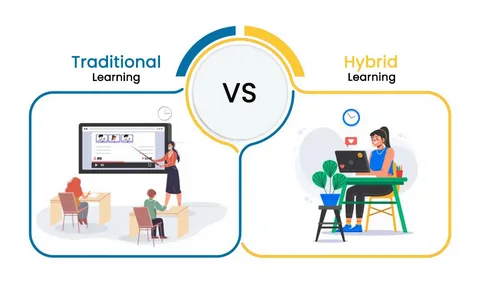
A combination of both methods may provide the best results. This approach is often called blended learning. Students attend physical classes while also using online materials and activities to support their learning.
The Future of Education
The future of education is likely to include both traditional and online learning. Technology will continue to provide new ways for students to access information and communicate with teachers.
However, physical classrooms will remain important because education is not only about receiving information. Students also need human interaction, guidance, teamwork, practical experiences, and emotional support.
The goal should therefore be to use technology where it provides real educational benefits while maintaining the strengths of traditional teaching.
Conclusion
Online learning and traditional classroom learning both have important roles in education. Online learning offers flexibility, convenience, and access to a wide range of digital resources. Traditional classroom learning provides direct interaction, structure, social development, and opportunities for practical activities.
Neither method is perfect. Online learning can be affected by technical problems, distractions, and unequal access to technology, while traditional learning can be less flexible and may make it difficult to provide individual attention.
A combination of both approaches may be the most effective solution. By combining the personal interaction of traditional classrooms with the flexibility and resources of online learning, education can become more accessible, engaging, and effective for a wider range of students.